
Concord Neighbors by Block Source
Concord neighbors are best understood through a set of block-level records, not one complete roster. A parcel map locates the lots; an APN carries a lot into property, tax, and deed systems; permit history adds project context. Voter tools work for a registrant's own match or an approved file request. The city Neighborhood Partnership explains how groups form, while older directories and archives add dated clues.
| Source | What It Shows About a Block | Access |
|---|---|---|
| Public Parcel Viewer / CCMap | Parcel outlines, APNs, address points, and map layers | Free map; click lots |
| Assessor and tax lookup | Parcel data, values, and a tax mailing party where displayed | Address/APN; counter |
| Clerk-Recorder index | Recorded parties, document type, date, and legal references | Index; Martinez counter |
| Road-centerline layer | Left/right ranges, parity, community, road class, and ownership | Public GIS layer |
| Concord permit history | Nearby project, applicant or contractor, dates, and inspections | City portal; Permit Center |
| Authorized voter file | Registered address or precinct data when lawfully released | Statutory application |
| Neighborhood and archive sources | Group routes or dated name-to-address clues | Program, library, or CCCHS |
An owner or deed party identifies a recorded interest or transfer. A tax mailing party is the destination for an assessment notice. A situs address is the physical location. None is a list of every person at the address. Renters, relatives, minors, and protected residents ordinarily do not appear in the parcel index.
The research did not confirm a public reverse or criss-cross directory run for Concord. Treat an early directory entry as a dated clue, not a current block roster.
Mapping a Concord Neighbor Block
Use the full address as the starting point. CCMap accepts an address or road search, reveals a parcel outline and APN, and supports map layers. Once the target polygon is clear, walk around it by clicking the adjacent parcels one at a time. No confirmed public buffer, radius, or export control was found for the viewer.
- Search the full address in CCMap or the Public Parcel Viewer. Check the unit and directional details, then record the APN, shown as a ten-digit key such as
123-456-789-0. - Zoom until the polygons are distinct. Click each touching lot and note its APN, situs address, and displayed map fields. A mapped boundary is not a legal survey.
- Carry each APN to property and tax systems. Compare the situs location with any mailing party, then use the key in recorded-document or Public Works map systems when title detail matters.
- If the question expands to every address on a named road, use the Concord street directory for the longer street-by-street chain.
When the online map fails, the Assessor counter at 2530 Arnold Drive, Suite 100, Martinez, answers parcel questions at (925) 313-7400, Monday through Friday, 8 a.m. to 4 p.m. Public Works at 255 Glacier Drive handles surveys, corner records, and current or superseded parcel books. The Property Research hub provides the map and request routes.
Concord APNs, Owners, and Neighbors
The common Concord neighbor mistake is treating three labels as synonyms. An APN identifies a tax parcel. A situs address locates it. A tax mailing address tells where a notice is sent and may belong to a trust, manager, relative, or other non-occupant. A recorded deed proves a transfer under a legal description, not who sleeps there now. Public property routes are therefore address and APN centered; a public owner-name search is restricted under California Government Code section 6254.21 and its recodified CPRA provisions.
Permit history adds useful nearby-address context without fixing the occupancy question. Concord's portal can be searched by permit number or address after choosing Building, Planning, or Engineering. Results may identify an applicant, contractor, project, work description, issue or status date, and inspection. The Permit Center is at Building D, 1950 Parkside Drive, Concord, (925) 671-3107. Online access is advertised around the clock, while drawings are inspected at the center and may require approval to copy.
- APN
- A parcel key carried from a map into tax, deed, and Public Works systems.
- Situs address
- The physical location mapped to a parcel, not a list of occupants.
- Mailing party
- The destination for a tax or assessment notice, not proof of residence.
The county ePermit history advertised from January 1, 1980 forward applies to county jurisdiction. It must not be silently treated as the coverage limit for Concord's city archive.
Concord Roads and Neighbor Addresses
A Concord road-centerline layer stores left and right from-to number ranges, parity, community, road class, and ownership. Those fields help explain odd and even sides and the extent of a road segment without turning the map into a household list. The city address service also keeps current and legacy street components, address-number parts, postal community and ZIP, incorporated municipality, council district, and location type.
Old names can break a neighbor search. Concord's city EIR records Second Street becoming Bacon Street and Maltby Avenue becoming Park Avenue, with old numbers that did not line up cleanly. For an older block, anchor the match to an APN, legal description, subdivision map, or Sanborn footprint instead of a street number alone.
Note: Postal community and incorporated municipality are separate fields, so a Concord parcel may carry Clayton or Pleasant Hill wording.
Why Concord Voter Files Exclude Neighbors
A voter lookup is not a missing button in a block directory. State and Contra Costa self-service tools match a registrant's own record using identifying fields such as name, birth date, county, and residence details. An ordinary visitor cannot type a Concord street and browse every voter. A matched voter can receive registration or election details, but that result is not a public household roster.
California Elections Code sections 2188, 2194, and 18109, plus Government Code section 7924.000, limit voter-file access and bar unauthorized use. A qualified applicant must use the required purpose, security certification, and fee route. Contra Costa Elections at 555 Escobar Street, (925) 335-7800, is the local contact. The county voting-information lookup remains a self-service path, not a street enumeration tool.
Use property, deed, permit, and community sources for a block question. Authorized voter data can add a precinct or registration clue only when the access rule permits it. Safe at Home and other confidential records remain protected.
Concord Neighbors and the Partnership
Community records answer how Concord neighbors organize, not who belongs to a private list. The actual Concord Neighborhood Partnership helps residents form self-sustaining associations and action plans. City materials do not confirm a named HOA or member-directory inventory, so a neighborhood label cannot supply a roster.
| Contact | Purpose | Route |
|---|---|---|
| Concord Neighborhood Partnership | Association formation and action plans | Official program; no member roster |
| Code Enforcement | Block-related city concerns | (925) 671-3075; cleanup@cityofconcord.org |
Neighborhood Watch groups commonly involve 10 to 20 neighbors, but group size does not make names public. An Adopt-A-Street sponsor sign may identify a civic, church, or neighborhood group connected to a corridor. Nextdoor neighborhood GIS layers show geography, not member rosters.
The Concord Chamber directory offers keyword, category, and A-to-Z browsing that can add a public business or civic affiliation clue near a block.
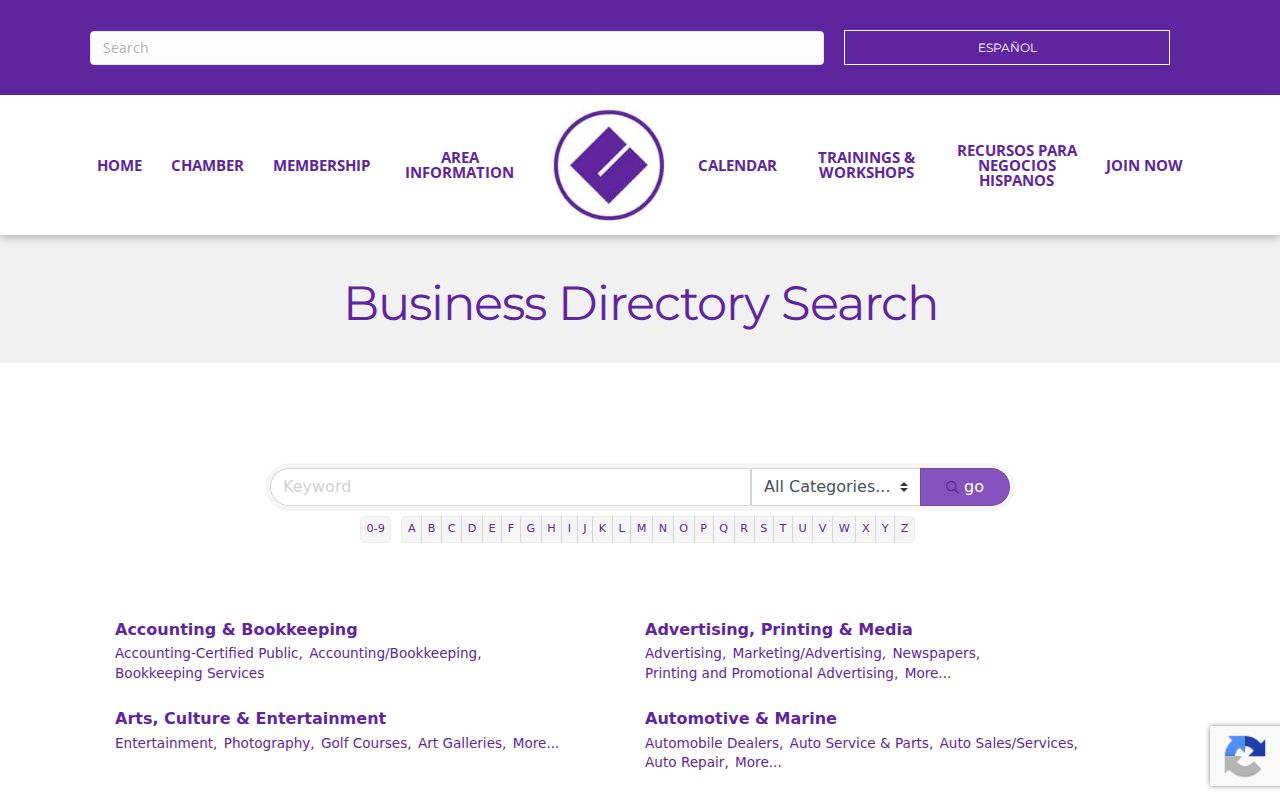
A Chamber profile gives business, contact, and location affiliation, not a household roster, so it belongs beside the Neighborhood Partnership layer.
Official Concord Records Compared With Neighbor Data
Official records and commercial neighbor-data products can look alike on a results screen but carry different weight. An official record has a custodian, a defined field set, and a correction route. A commercial product may merge public and purchased data into a profile. Convenience does not make that profile an official record.
| Source type | Strength | Limit and proper use |
|---|---|---|
| County or city parcel, tax, and deed records | APN and recorded property context | Owner or mailing clues, not occupants; verify with the custodian |
| Permit and public agency records | Project, address, and date evidence | Applicant is not necessarily an occupant |
| Authorized voter file | Registration or precinct fields when lawfully released | Restricted purpose; no street browsing or ballot choices |
| Commercial neighbor-data category | Quick cross-record association | Stale or merged names, paid access, and no authority over protected residents |
The official path can be slower because each record answers one question, yet its pieces can be checked. A careful neighbors search keeps an APN, document key, permit number, and retrieval date with any conclusion. If a source is wrong, correct it with the originating office rather than with a compiled profile.
What a Concord Neighbor Search Leaves Private
Some facts should remain off the map. Renters, relatives, minors, utility customers, delivery recipients, and other household members are not a public parcel index. DMV address data is restricted by the federal DPPA. California Safe at Home protects qualifying participants, and Government Code sections 6205 through 6211, including section 6208.1, can restrict publishing a participant's home address, phone, or image. Never try to reverse a substitute address.
California Penal Code section 646.9 and related threat and harassment rules make public availability no permission to threaten, repeatedly contact, track, or intimidate. A Concord neighbor lookup suits lawful personal research, community contact, reconnecting, property curiosity, or safety awareness. It does not permit exposure of private household details.
An identifiable, nonexempt city or county record can be requested under the California Public Records Act by email, mail, fax, or oral request. Describe the address or APN, department, record type, and date span. For older block clues, the Contra Costa County Historical Society and Concord Library provide archive and library routes. Those fallbacks do not create a current neighbor list.
A CPRA request ordinarily needs no stated purpose or identification, but it must describe an existing record. Exempt material may be redacted, and an agency need not create a new list. Recorder, court, and vital certifications follow their own fee schedules.
Lawful use. Use Concord neighbor records for personal, lawful research and ordinary community contact. Do not use an address clue to stalk, harass, threaten, or intimidate any person, or to reveal protected residents.